Gaming Development Timeline
CONSOLES
The first
Video Game console released to the public was called The Magnavox Odyssey; it
was released in 1972 by Magnavox. The Magnavox
Odyssey was the start of the console generation, their successes lead to the
development of the consoles you know today.
1970
1975: Atari
released a home version of the arcade game “Pong”. It was a small box with the
controllers built into it, 2 small dials to control the pong paddles.
1977: Atari
released the Home Computer System, or Atari 2600. It came with a joystick and
interchangeable game cartridges.
1979:
Toy-maker Mattel releases a new hand-held console, the Intellivision. It has
superior graphics and more sophisticated controls to the Atari 2600, and sold
over 3 million units.
1980
1985: The
Nintendo Entertainment System (NES) was released in America, 2 years after it
was released in japan as Famicon.
1989:
Nintendo's Game Boy popularizes handheld gaming. Game Boy is not the first
handheld system with interchangeable cartridges—Milton Bradley introduced
Microvision 10 years earlier. The Game Boy Colour had accessories such as a camera and even a printer that allowed you to print the pictures you took with the camera.
1990
1995: Sony
releases PlayStation in the United States, selling for $100 less than Sega
Saturn. In 2000 Sony decided to release a slim version and even eventually the PlayStation 2 and becomes the
dominant home console. This was the first console to ship 100 million units after 9 long years.
1998: After the failure which was the Sega Saturn, its successor the Sega Dreamcast which helped Sega make a comeback, it had high sales figures due to 4 player co-op and continuing franchises, however after the PlayStation 2 was released its sales began to decline as it could not support DVD's.
2000
2000: Sony decided to release the PlayStation 2 and becomes the dominant home console.
2001:
Microsoft releases the first Xbox, along with hits like Halo: Combat Evolved. As part of the sixth generation of gaming it had to compete with Sony's PlayStation 2, Sega's Dream-cast and even Nintendo's GameCube. Microsoft then created Xbox Live which featured with the Xbox console however it was limited as it required a subscription fee unlike the PlayStation and Dream-cast online systems.
2005: During 2005 the Xbox 360 was announced and this was Microsoft's 2nd console released into the market, the console system came with enhanced online multiplayer, Netflix, ESPN as well as TV and Music feature added later on.
2005\6\9: Announced in 2005 and released in 2006 the PlayStation 3 was Sony's 3rd console, during the initial launch the console had 20GB and a 60GB model with Backwards Compatibility, however it was later removed, in 2009 a slim version was released which was smaller and quieter even though the PS3 had free online services and a Blu-Ray Player it was still weaker than the Xbox 360 which in return caused people to buy the 360 over PS3.
2006:
Nintendo unveils their motion-sensitive console, the Wii, getting people off of
their couches. It had a lot of fitness games so people could exercise in the
comfort of their homes.
2012: During E3 Sony announced the PlayStation 4 and was soon released the same year.
2014:
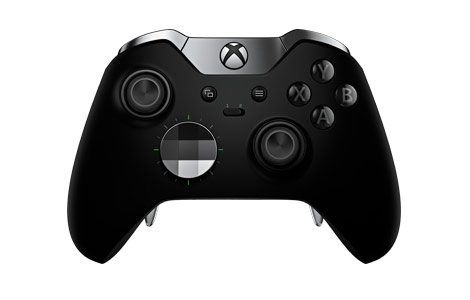
The Xbox One released another console from Microsoft. It was an advancement in
console technology, introducing faster processing and better graphics than its
predecessor.
Arcade
1970
1971: At the start of 1971 the first ever coin-operated video game was released and installed in Stanford University in September it was known as Galaxy Game and it only cost 1 dime per game or a quarter for 3. Also the game was programmed by Bill Pitts and Hugh Tuck and used dual joysticks instead of one.
1972: In 1972 Pong was released to the public, which was the very first commercially successful arcade machine and sold around 19,000 units. Eventually Pong was released on several first gen consoles, however it was limited to being a an arcade game so people had to play where the machine was installed.
1978: Later on in the late 70's, Space Invaders was created by Toshihiro Nishikado in 1978, the game remains as one of the most popular arcade games. The first design of space invaders had you shooting soldiers but was later changed as they thought it might encourage killing and like many other games it was limited to arcade stores but was able to please consumers for hours and the joysticks were also replaced with buttons.
1979: Atari finally released Asteroids which was a major hit during the golden age of arcade games and even sold over 70,000 units, this meant that Asteroid was Atari's highest selling game to date.
1980
1980: In 1980 the most successful game in history was released commonly known as PAC-Man which sold over 350,000 cabinets and racking up 2 billion dollars, this equal up to 3.4 billion with inflation. PAC-Man attracted all kinds of gamer's such as male, female, young and old. This game became a pop culture phenomenon.
1981: In 1981 the very first platform game was released known as Donkey Kong and this was the only other game at the time which featured multiple level and was the first to have a actual story line and even a damsel in distress. In one year, Donkey Kong sold 60,000 units and made around $180 Million.
1985-86: With the release of the NES in 1985 and the Sega Master System in 1986, the focus was then put onto home gaming systems.
1990
1991: When the industry started to focus more on home consoles Capcom decides to release Street Fighter II which brings a comeback to the arcade generation. After this fighting games like Mortal Kombat and Virtual Fighter become a huge success.
1999: During this time arcade fighters were popular but Konami decided to release Dance Dance Revolution and surprisingly they saw a 260 percent raise in their net income.
2000
2000: Sega released a new flight simulation known as Strike Fighter.
2005: Nintendo designed a built-in cameras to snap a photo of the player and use them in Mario Kart Arcade GP.
2009: Activision and Konami come together and create Guitar Hero Arcade after the huge success on consoles.
2010: Dead Heat Street Racing was the first arcade game to feature score sharing through social media such as Facebook and allowed you to take pictures and share them.
2013: 43 years after one of the first arcade machines were ever created, a 4D arcade game is finally released the game known as Dark Escape 4D combines surround sound, 3D glasses, vibrations, a heart rate monitor and blasts of air.
PC
1940
1940: Edward U Condon creates a computer that is able to play the game Nim, which involved players trying to avoid taking the last matchstick. The computer played against thousands of people and won around 90% of the games played.
1947: Thomas T Goldsmith Jr, and Estle Ray Mann filed a patent for a device called a cathode ray tube amusement device. The game they made uses a cathode ray tube that is hooked up to a display, and challenges the players to shoot a gun at a target.
1950
1950: Claude Shannon creates a basic guideline for programming a computer that can play chess.
1952: A S Douglass created noughts and crosses using the EDSAC computer at Cambridge, as part of his research into human-computer interaction.
1954: some programmers at the Los Alamos laboratories in New Mexico developed the first program for playing blackjack. Another program on the same machine could play checkers, and six years later managed to defeat a checkers master.
1960
1962: Steve Russell invented the game ‘Spacewar!’ which was the first ever computer-based game. Soon after the Cuban Missile Crisis, the US defence department designed and developed a war game called ‘STAGE’, which showed that the Soviet Union would be defeated in a thermonuclear war.
1964: A computer time-share system was created, and the ‘BASIC’ programming language, which made it easy for people to create games.
1970
1970: ‘Scientific American’ published the rules for ‘LIFE’. It was a simulation in which isolated or overcrowded cells would die, while other cells would continue to live and reproduce.
1973: David Ahl published ‘101 BASIC computer games’, which allowed players to do things such as becoming a king, commanding a northern land to fight the south, and discovering monsters inside a grid.
1980
1984: A Multi-User Dungeon called ‘MAD’ became the first global MUD.
1986: A educational game market leapt forward with ‘Reader Rabbit’.
1989: In 1989, Maxis released the city building game called ‘SimCity’. By the October of next year, then game had won 21 awards.
1990
1990: Microsoft released a virtual version of the card game Solitaire with its new ‘Windows 3.0’. The game was played by millions of people who would never play on a console, and Solitaire is now known as one of the most popular games ever. The popularity of Solitaire paved the way for quick and easy casual game model.
1992: ‘Dune II’ was created, which first established RTS (Real-time strategy) games in the industry.
1994: Blizzard released their own RTS game called ‘Warcraft: Orcs and Humans’, which first introduced players to the Warcraft universe.
1997: the Chess world champion Gary Kasparov was defeated by IBM’s supercomputer chess program.
1999: Sony Online Entertainment (SOE) released the MMORPG ‘Everquest’, in which thousands of players could fight monsters, form guilds and explore together in the online world called Norrath.
2000
2000: ‘The Sim’s was finally released, It wasn't the first simulation game to come out, but it became the most popular and best-selling computer game ever.
2002: The Woodrow Wilson International Center for Scholars launched the ‘Serious Games Initiative’, which encouraged the development of games which address issues with policy or management.
2003: Valve introduces the digital distribution software ‘Steam’, which allows PC gamers to download and play video games.
2008: Blizzard release's ‘World of Warcraft’, which became the most popular MMO game ever, reaching 10 million subscribers.
Mobile
1990
1994: One of the first games to be put on a mobile phone was ‘Tetris’, was released.
1998: In 1998, Nokia put the video game ‘Snake’ onto their mobile phones. Due to its popularity on phones, multiple versions of Snake were released for later versions of mobile phones.
2010s
2012: ‘Candy Crush Saga’ was released to app stores by King. The game was very similar to Bejeweled, but featured small micro transactions. Candy Crush is played by millions, and was a huge success for King. In 2012, the real-time augmented reality game ‘Ingress’ was released for Android mobile devices.
2014:In 2014, revenue from in-app purchases was expected to climb close to $8 billion. Many mobile games include micro transactions, like Candy Crush charging $0.99 for lives.